
2025 in Space: Our top 10 stories of the year
It's been a wild ride.

This newsletter was brought to you by Sonder London. Follow us on LinkedIn here. Thanks for reading.
Hello, and welcome to a special 2025 edition of The View from Space. Here are 10 of our favourite stories from the past year.
Trump 2.0 signalled a ‘golden age’ for space
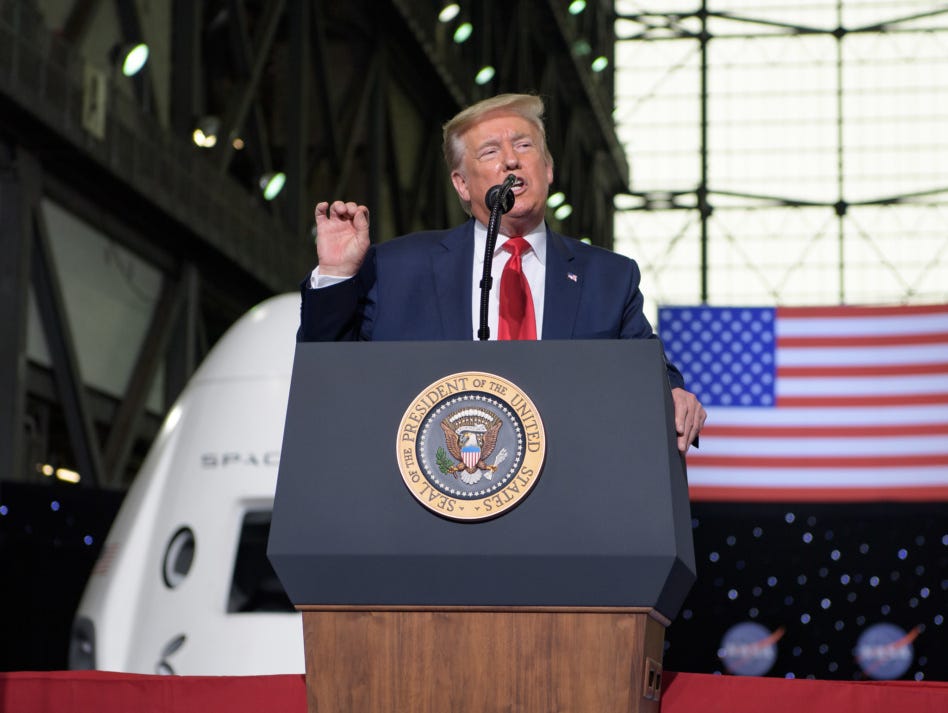
👑 In Payload, NewSpace Capital founder Bogdan Gogulan explained why, love him or loathe him, Donald Trump would be good news for commercial space operators … though there would be challenges:
‘Trump is expected to slash red tape, fast-track approvals, and create incentives for private players to operate freely in space. This means a surge in satellite communications, EO, space tourism, in-orbit manufacturing, and scientific research.
… The bottom line? Under Trump, space will become an engine for economic growth, military strength, and national prestige. There will be an expansion in technology related to Martian expeditions, defence, and commercial spaceflight. Big private companies like SpaceX, Blue Origin, and Rocket Lab will benefit, as well as leaner, more efficient, more focused companies, which will challenge ‘old space’ companies like Lockheed Martin, Raytheon, and Northrop Grumman.
Investors, however, should also take note of potential hurdles: trade disruptions, geopolitical tensions, and shifts in NASA’s budget, which may have knock-on effects for certain sectors. We’re beginning a new chapter in the story of space, one where political will and private industry will align in ways not seen since the Cold War.’
Katy Perry baffled everyone on Blue Origin’s New Shepard
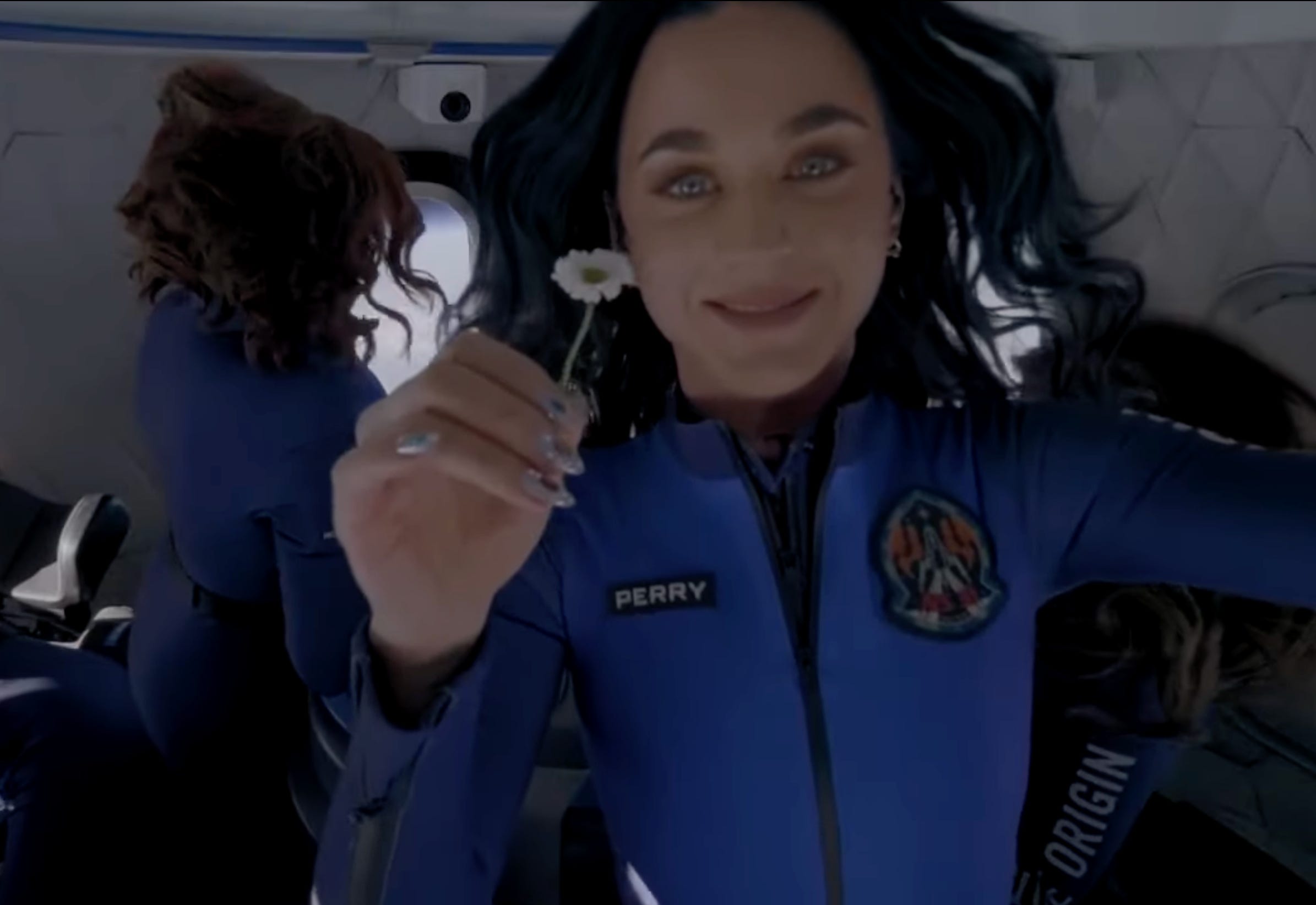
🤔 Hollie Cole of the BBC showed admirable restraint in describing Katy Perry’s behaviour on an all-female Blue Origin New Shepard flight on which the hitmaker floated around with a daisy, gave an impromptu rendition of ‘It’s a Wonderful World’, and kissed the ground upon her return to Earth after 10 minutes in space, (evoking Kevin Costner’s strangely American Robin Hood):
‘Six women boarded Blue Origin’s New Shepard rocket, marking the first all-female flight since 1963. That flight saw cosmonaut, Valentina Tereshkova, orbit Earth 48 times on a solo mission lasting three days.
As quickly as they’d taken off, the crew landed back in Texas. On board, Katy Perry, Amanda Nguyen, Gayle King, Aisha Bowe, Kerianne Flynn, and Lauren Sánchez experienced zero gravity, saw the moon and heard Perry’s rendition of “What A Wonderful World”.
Onlookers, including Oprah Winfrey, Kris Jenner, Khloé Kardashian, female astronauts and Perry’s daughter Daisy, watched on as the rocket disappeared into the sky.
“Earth looked so quiet,” journalist Lauren Sánchez said after the journey, while film producer Kerianne Flynn described it as the “most incredible experience of my life”.
Though, questions were raised about the affordability of such a mission and whether this experience could become as common as jets flying across the world.’
The Golden Dome was dubbed a ‘risky fantasy’
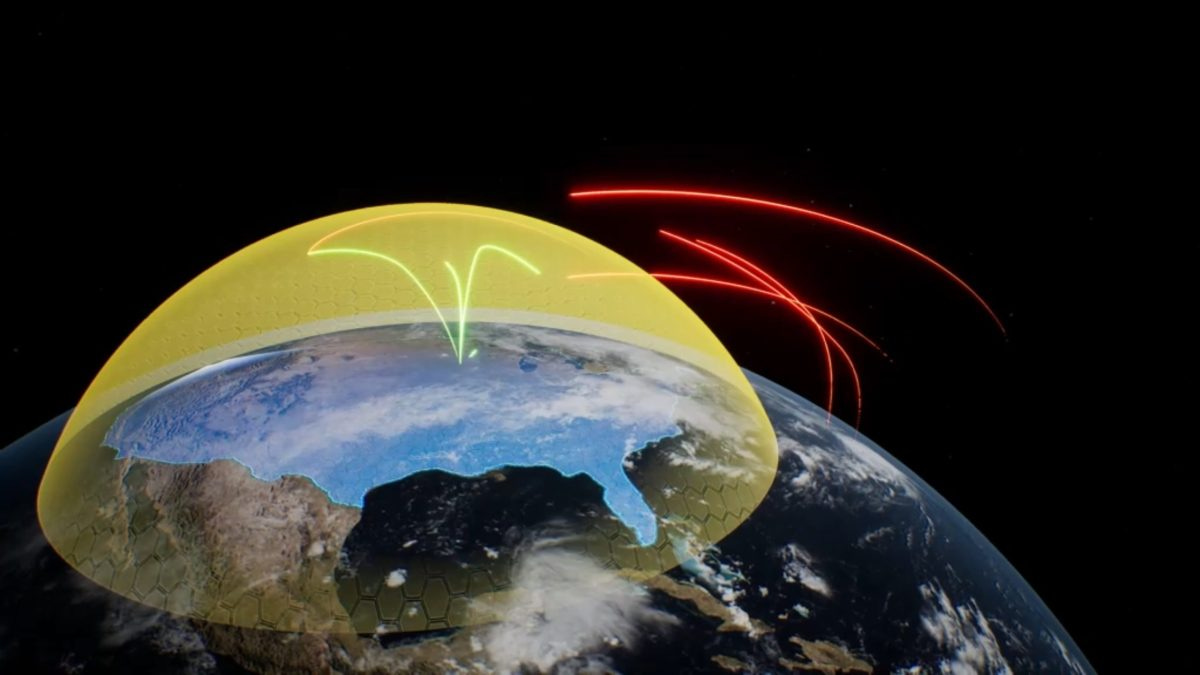
⭐️ Trump again. In an interactive long-read for the Washington Post, Christian Davenport, William Neff and Aaron Steckelberg asked whether President Trump’s Golden Dome would address ‘a glaring U.S. vulnerability’ – or ignite an arms race that would last generations:
‘Golden Dome would radically reshape military doctrine and further militarize space, an effort that’s been compared to the rush to build the atomic bomb during World War II and the Apollo moon landings. Yet it still may not come close to providing the kind of comprehensive protection Trump says it will. …
Critics deride the most ambitious part of the program — flooding low Earth orbit with thousands of satellites to detect and take out adversaries’ missiles — as a fantasy that will only destabilize the fragile international order that has prevented nuclear war for more than 70 years.
“Golden Dome could be the single most dangerous idea Trump has ever proposed, and that’s saying something,” Rep. Seth Moulton (D-Massachusetts), a member of the Armed Services Committee, said in an interview.
Proponents counter that because of expanding threats, as well as dramatic technological advances, the time is right to resurrect the Reagan-era Strategic Defense Initiative, known as “Star Wars,” that fizzled out at the end of the Cold War. For years, defense hawks have pushed for a more robust missile-defense shield, citing the unsettling truth that the United States doesn’t have a comprehensive way to protect its homeland.
China and Russia, meanwhile, are already expanding their nuclear arsenals in the largest long-range weapons buildup since the Cold War. They are adding hundreds of intercontinental ballistic missiles as well as new weapons systems, including hypersonic weapons designed to speed toward U.S. cities at more 4,000 mph, according to intelligence officials.
Airbus, Thales and Leonardo (finally) merged

🤝🏻 After years of discussion, Airbus, Thales and Leonardo struck a deal to create a European champion able to compete in a market unsettled by Elon Musk’s SpaceX, reported Peggy Hollinger and Sylvia Pfeifer of the FT. But the idea that it might rival SpaceX/Starlink seemed … optimistic, to say the least. NewSpace Capital Partner Daniel Biedermann wrote for The Engineer that ‘a reality-check is in order’ – but that smaller companies could be the real winner of the European mega-merger:
‘These European firms are great houses, with a tradition of quality, but they’re also bureaucratic and slow. They have to work within a framework of EU rules, procurement codes, national treasuries, and political interests. That isn’t helpful if the aim is the innovation and ambition typical of Space X/Starlink.
But it could be good news for the wider European space landscape. When the great primes merge, smaller companies have the chance to stand out. While the leaders of Airbus, Thales and Leonardo are tied up in thorny questions of structure, process, and power, gaps will appear. And into those gaps other companies can step. They can find niches – niches too small, strange or new for the giants to reach.
These might involve novel sensing payloads, agile satellite buses, or AI for data services. These are ideal for companies that can try, fail, and adapt quickly. And when the merger is complete, and the new company is thinking with one mind, it will still depend on subcontractors and suppliers. No prime can do it all. Smaller companies can pitch themselves as valued providers, rather than rivals.
My advice to these smaller companies? Take the opportunity.’
Germany unveiled its first space defence strategy
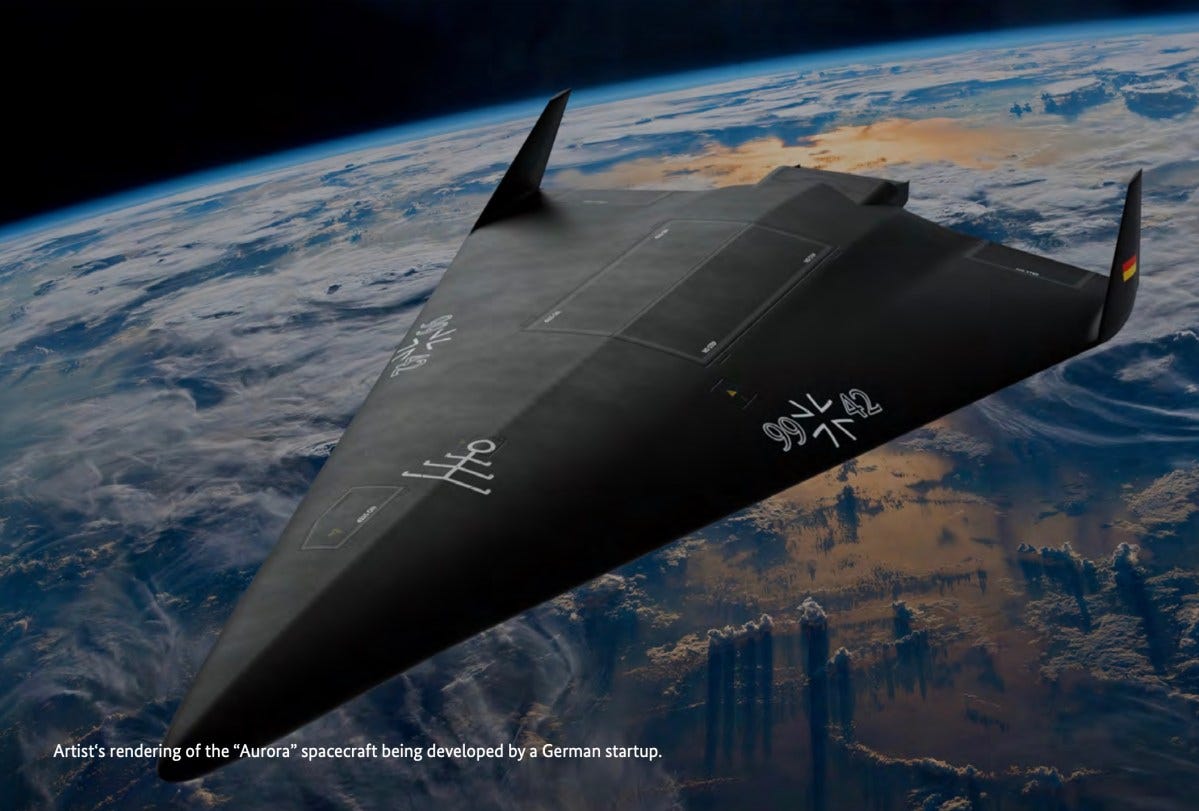
🛰️ Germany passed its first national space security strategy, which involved a promise to invest €35 billion by 2030 in space – equivalent to the entire budget of the European Space Agency. Bloomberg put it like this:
‘The new strategy laid out on Wednesday by Chancellor Friedrich Merz’s cabinet focuses on joint projects with allies, expanded satellite networks and the promotion of “responsible state behavior” in space. It comes on the heels of a September announcement that the defense ministry would invest €35 billion ($40.5 billion) in space projects by 2030.
The aim is to become more independent and capable of acting in space together with European allies and other NATO member states, Defense Minister Boris Pistorius told reporters in Berlin.
“Space systems have become an integral part of our lives. A failure or disruption would have serious consequences for our security and our everyday lives,” Pistorius added. “We are already seeing, for example, that Russia regularly jams GPS signals in the Baltic Sea region.”
The security strategy sets the framework for how Germany can better protect and defend itself in space and make its satellite networks more resilient. The armed forces would be crucial to that effort, Pistorius said, and the country will establish a military satellite operations center in its armed forces’ space command.
Pistorius told a space industry congress in September that the €35 billion would be used to harden military space systems against disruptions and attacks. Germany will also discuss with allies the development of “offensive capabilities” in space, he said.’
China’s space programme boggled minds
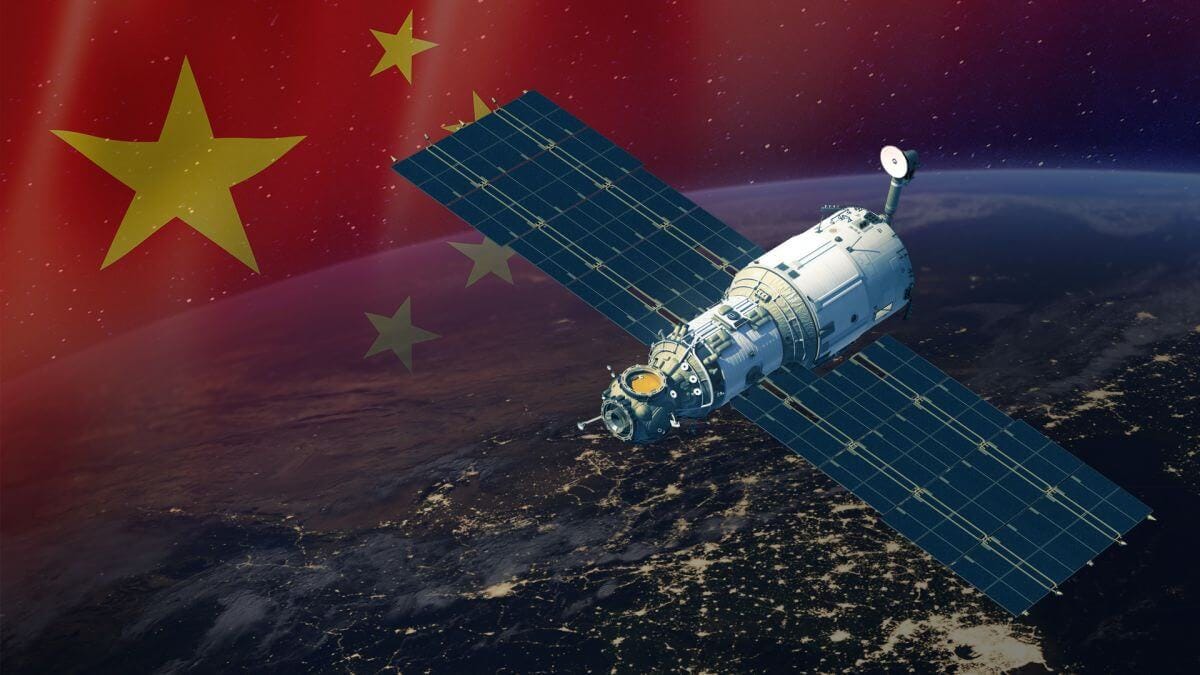
🇨🇳 In SpaceNews, Sandra Erwin reports that U.S. military leaders are describing the scale, ambition and progress of China’s space programme as ‘mind-boggling’:
‘In its 745-page Annual Report to Congress scheduled to be released at a public event Nov. 18, the bipartisan U.S. China Economic and Security Review Commission lays out a blunt assessment of Beijing’s push to become the world’s top space power.
The commission, created by Congress in 2000, has long tracked China’s economic and military rise. This year’s edition says the speed, scale and ambition of China’s space program have entered a new phase that U.S. military leaders describe as “mind boggling.”
Space Force Gen. Chance Saltzman, the U.S. chief of space operations, used that phrase in testimony to the commission as he detailed a rapid expansion of Chinese space based systems designed to give Beijing an edge across peacetime competition and potential conflict. The report cites Saltzman’s warning that China’s growing arsenal of military space capabilities threatens the United States’ ability to rely on satellites for targeting, communications and surveillance, especially in a Western Pacific contingency where long distances and scattered U.S. forces depend on resilient networks.
“China’s rapid advancements in space capabilities should concern every American,” the commission writes. It stresses how deeply U.S. society depends on satellite services for GPS navigation, banking, weather forecasting and the power grid. Defense officials say that dependence remains underappreciated outside national security circles.’
Space warfare arrived
🛰️ Anti-satellite technologies (ASATs) became the new military ‘must-have’ for spacefaring nations. Bleddyn Bowen, associate professor in Astropolitics at Durham University, said ‘counterspace’ – ie, attacking satellites – was becoming mainstream aspect of military operations. Space.com reported:
‘Are we already witnessing ASAT techniques in regular use?
“They are happening right now with Ukraine,” Bowen noted, pointing to commercial satellite providers, like the SpaceX Starlink system, that have experienced jamming and cyber attacks on their in-orbit hardware. Similarly, GPS signal interference is front and center, traced back to Russia.
“What you’re seeing is the normalization of attacking satellites within war plans. It’s becoming a more mainstream aspect of military operations,” said Bowen. …
The past is prologue for space, suggests Bruce McClintock, lead of the RAND Space Enterprise Initiative.
“In the early space-era, the Soviet Union and the U.S. extensively tested a variety of different technologies for ASAT weapons, up to and including nuclear detonation tests in orbit,” McClintock told Space.com.
While agreements were inked to stop such tests, the Russians are reportedly revisiting the concept and have started developing a system. “That is incredibly concerning,” said McClintock.
“There are enough indicators from enough nations that this is not just posturing,” advised McClintock. “A lot of people are talking about Russia doing this. It’s an indiscriminate weapon. It can’t just target certain satellites. It would have short to long-term effects for everybody,” he said.’
SpaceX’s Starship completed its 11th flight test
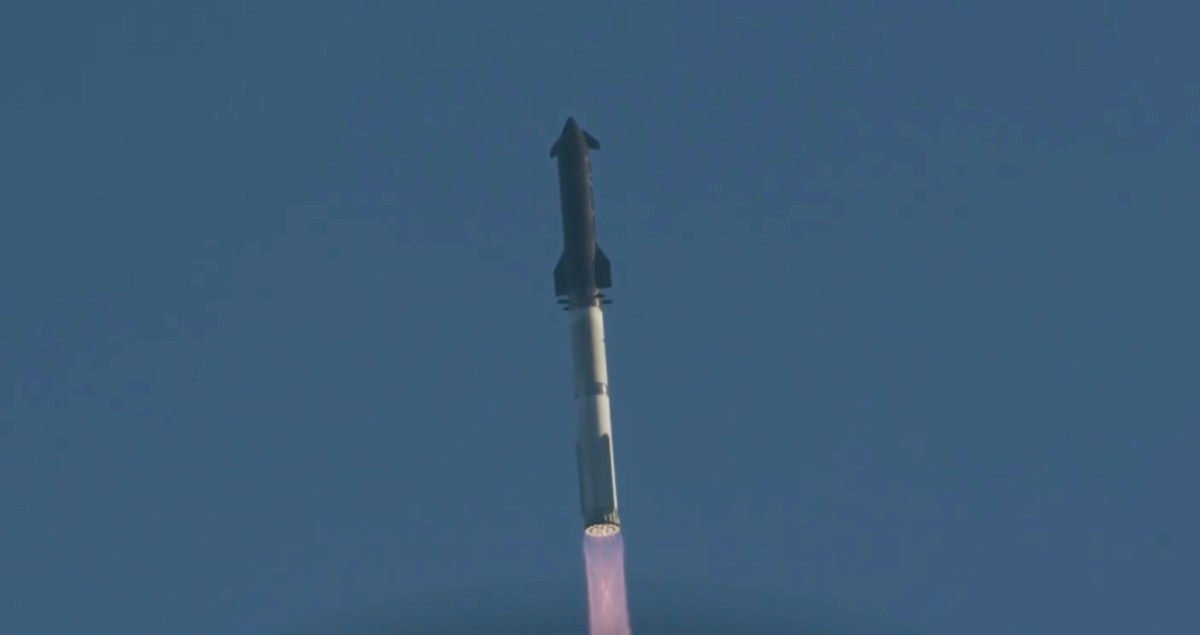
🚀 In SpaceNews, Jeff Foust reported that Starship, which will play a key role in NASA’s Artemis lunar exploration campaign, successfully completed its 11th flight test. After a history of failures, Starship achieved its mission goals: booster separation, upper stage flight, deployment of dummy payloads, and splashdowns:
‘The launch concludes a brief but turbulent history of version 2 of Starship. The vehicle’s first three launches, in January, March and May, all suffered mission-ending failures in flight. In the first two cases, those failures occurred during ascent, resulting in debris falling over the Caribbean. In June, a Starship upper stage exploded on a test stand at Starbase during preparations for a static-fire test.
SpaceX recovered with the Flight 10 mission Aug. 26, which completed all its planned major objectives, from deployment of Starlink mass simulators in space to a pinpoint reentry and soft splashdown in the Indian Ocean.
Next for SpaceX is version 3 of the vehicle, featuring upgrades to increase payload performance. This version will likely be the first to reach orbit after one or more suborbital test flights. SpaceX plans to use the vehicle to deploy larger next-generation Starlink satellites tested on recent flights.’
Amazon’s Project Kuiper came of age (and changed its name)
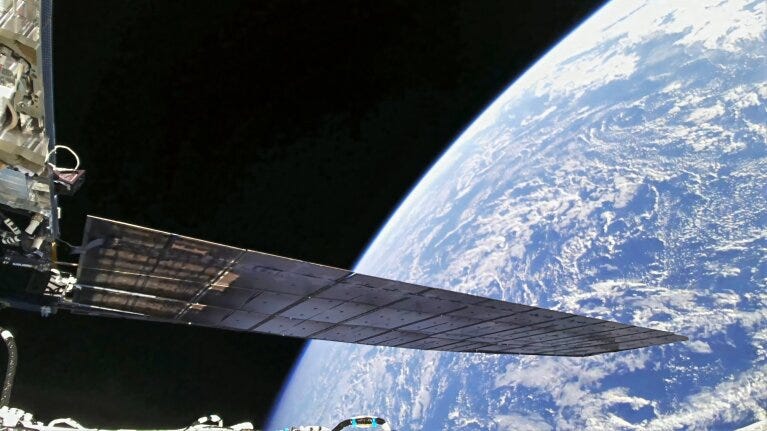
🚀 Project became product as Amazon’s Kuiper low-Earth orbit satellite network moved from tests to sustained deployment and rebranded as Leo. The network will eventually include about 3,200 satellites, to be taken to orbit on more than 80 launches and a variety of rockets. Amazon set out its vision:
There are billions of people on the planet who lack high-speed internet access, and millions of businesses, governments, and other organizations operating in places without reliable connectivity. Poor connectivity means limited access to modern communications, education, health services, and other important resources, which can create an economic disadvantage for people, businesses, and other organizations operating in unserved and underserved parts of the world. …
You don’t have to travel far from major cities to lose internet connectivity—it can happen within a 60-minute drive from Amazon’s headquarters in Seattle. Cost, complexity, and geography can make it difficult to install traditional, ground-based fiber and wireless connectivity solutions in these areas. Satellite broadband can fill many of those coverage gaps, but developing and deploying satellite technology requires significant innovation and investment. Amazon has the people and resources required to deploy and operate global satellite broadband services, and we feel a responsibility to use our success and scale to help bridge the digital divide.